

Gorol Chilli · Pěstitelský návod
Izolované osivo
Honba za mýtem, který neexistuje? Papriky jsou samosprašné, ale hmyz a vítr přenášejí pyl mezi odrůdami a způsobují nechtěné křížení. Podíváme se, jak opylování probíhá, proč na trhu není nic jako 100% izolované osivo a co děláme od roku 2025 pro minimalizaci hybridů.
40–80 %
Hybridů venku
~20 %
V běžném skleníku
2–5 %
V zasíťovaném
0 %
100% izolace neexistuje
I
Co je křížení u paprik
Samosprašné, a přesto
Papriky (Capsicum spp.) jsou samosprašné oboupohlavné rostliny — každý květ se většinou opyluje vlastním pylem. Přesto může ke křížení dvou rostlin dojít; v plodech pak vznikají semena, z nichž klíčí rostliny s jinými vlastnostmi (tvar, barva, chuť, pal). Pro pěstitele je to zásadní problém — chceme, aby zákazník dostal objednanou odrůdu, takže musíme křížení co nejvíc zabránit. Stoprocentně to ale nejde, a to je třeba si ujasnit hned na začátku.
II
Co je izolované osivo
Marketing vs. realita
S termínem se setkáme často, ať v nabídkách, nebo na fórech. Ve skutečnosti ale 100% izolované osivo není u paprik na trhu dostupné — vždy jde o osivo z izolovaného prostředí, které jen minimalizuje šanci na přenos cizího pylu.
Tvrzení o „100% izolaci" je nepravdivé, pokud osivo nepochází z indoor pěstování, kde má každá rostlina vlastní stan. Stejně nepravdivé je tvrzení, že zasíťování nemá na přenos pylu vliv — ochranné sítě riziko skutečně snižují, a víc a jinak, než si mnozí myslí.
III
Jak probíhá opylování
Komplikovanější, než se zdá
Pár pevných základů: pyl dozrává krátce před otevřením květu; prašníky praskají obvykle ráno a pyl se přenese na lepkavou bliznu; pylové zrno, které dopadne první, má výhodu a začne prorůstat láčku k vajíčkům. Háček: semeník má více vajíček, takže i později dodaný cizí pyl může některá oplodnit — jeden plod tak může obsahovat semena z různých květů i od jiných rostlin.
U některých odrůd probíhá opylení ještě před otevřením květu (pre-anthesis selfing); studie uvádějí, že až 70 % květů C. annuum bylo opyleno před otevřením. Takové odrůdy se nekříží, ani když rostou pomíchané v záhonu.
Pyl tvoří lepkavé kupičky nevhodné pro přenos na dálku — vítr květy jen zatřese, ale přenašeč to není. Za většinu přenosu mezi rostlinami odpovídá hmyz (včely, čmeláci, vosy, mouchy); literatura uvádí, že až 90 % hybridních plodů vzniká přítomností opylovačů.
Podíl hybridů se proto liší podle prostředí. Venku bez bariéry je riziko 40–80 % (z 10 semínek 4–8 hybridů). Klasický skleník sníží riziko na ~20 % (2 hybridi z 10) — ale s velkým množstvím opylovačů uvnitř může být stejné jako venku. Pokud skleník zasíťujeme proti hmyzu a zabráníme jeho vývoji uvnitř, klesá šance na hybrid na 2–5 % — z balíčku často nevyroste žádný. A co je nejlepší: v tom případě nehraje roli ani rozestup sazenic.
IV
Jak izolujeme rostliny my
Komplexní opatření
Donedávna jsme byli posedlí 100% izolací, až jsme pochopili, že je to nedosažitelný cíl — vyžadoval by samostatné stany na každou odrůdu (světlo, vzduchotechnika, závlaha) a cenu osiva neprodejnou běžnému zákazníkovi. Místo toho aplikujeme co nejvíce opatření, která křížení zamezí. Jak to děláme?
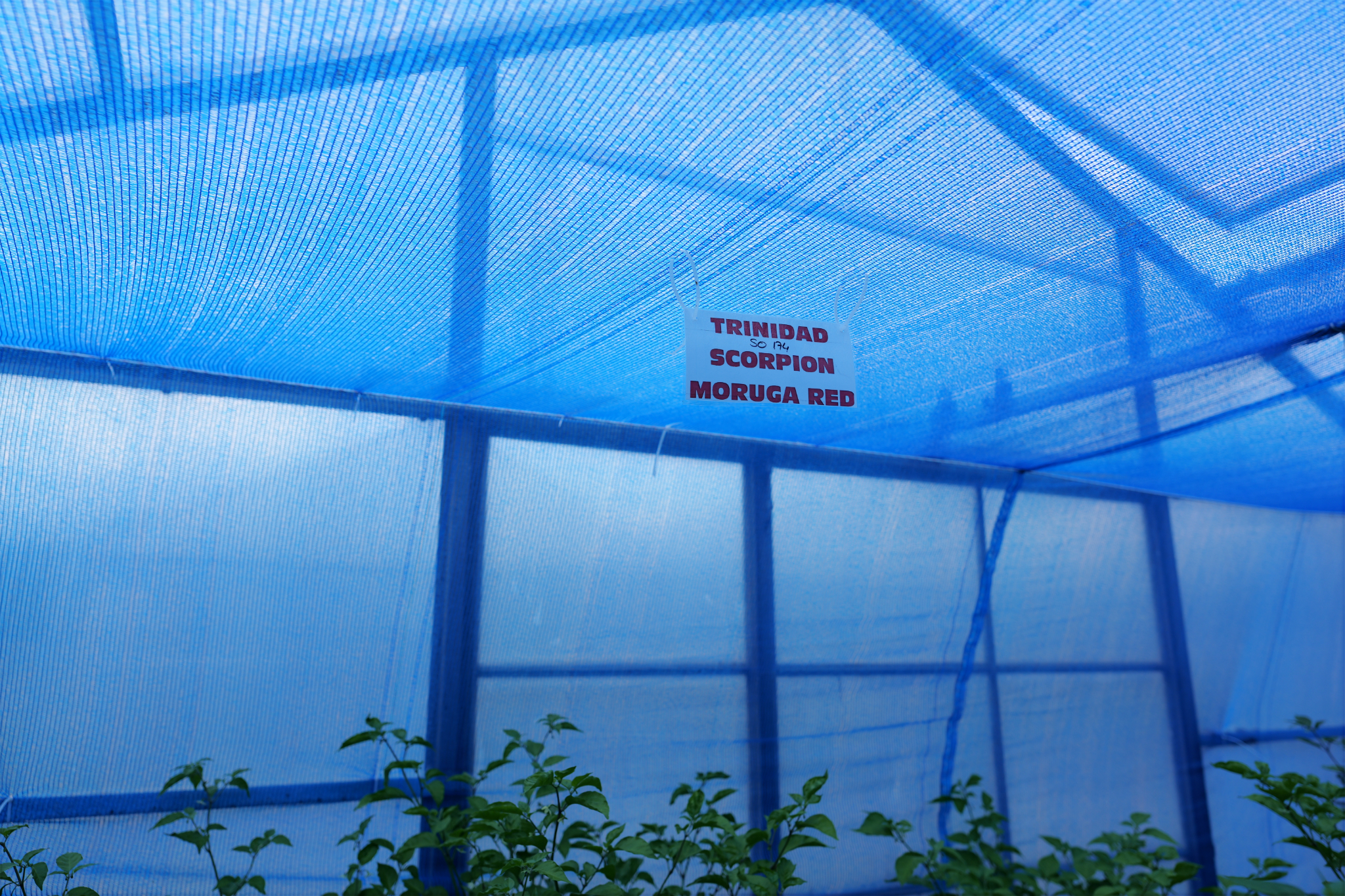
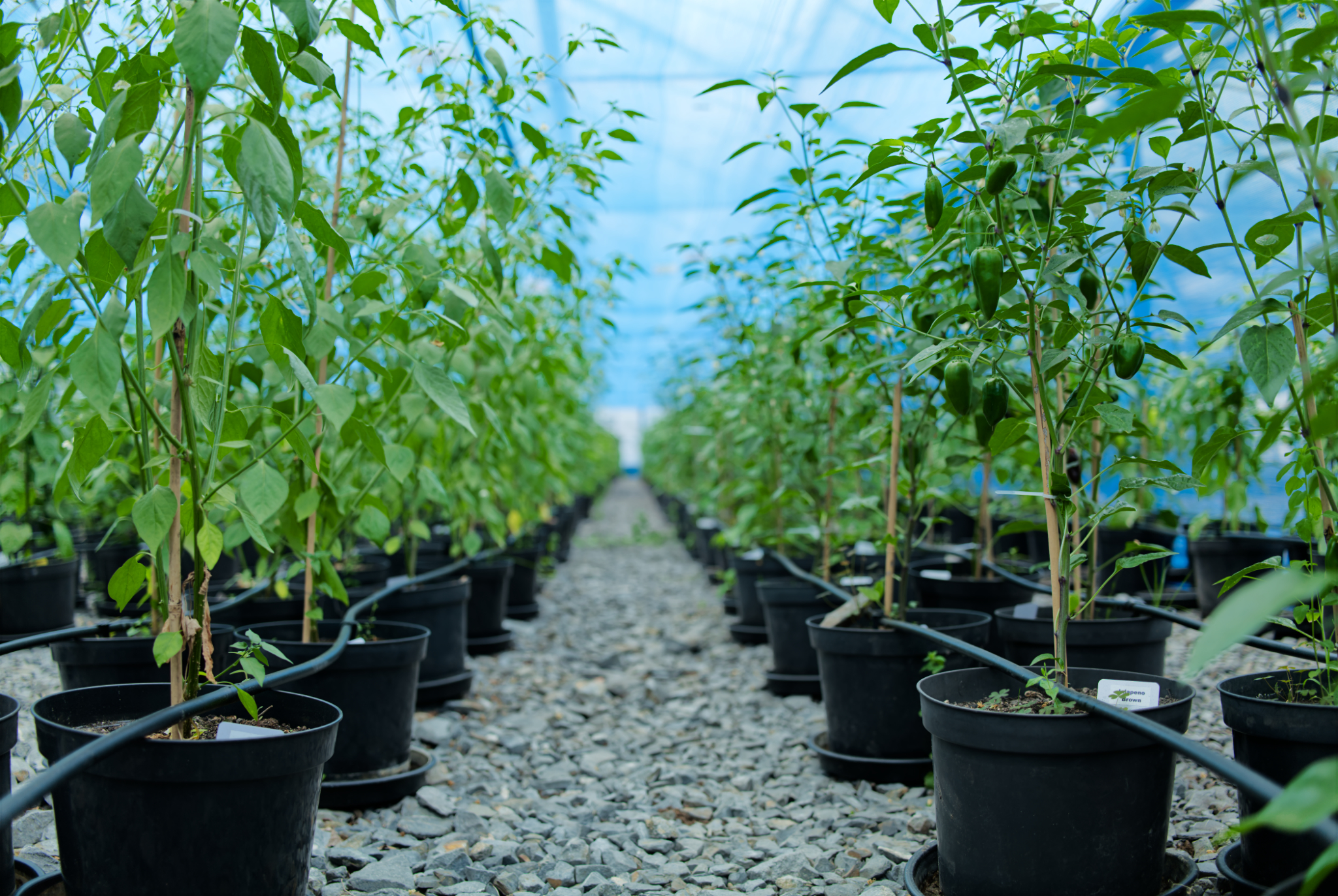
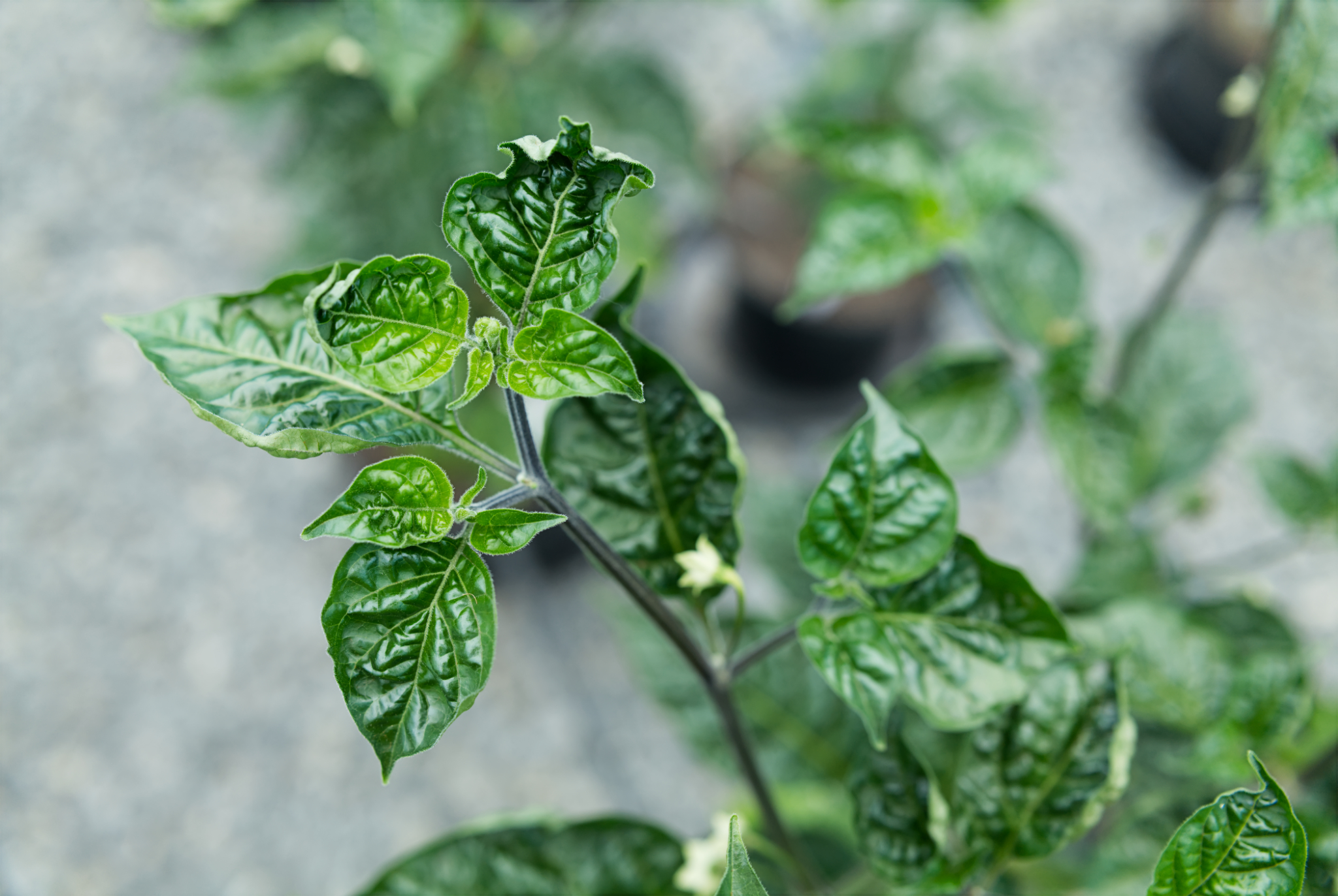
Všemi kroky snižujeme riziko křížení na úplné minimum — přesto otevřeně přiznáváme, že 100% čistotu zaručit nelze; takové osivo dle našich informací na evropském trhu není.
Můžete narazit na tvrzení, že pěstitelé s tkaninou jsou „záclonáři" a izolace nemá smysl. Záleží ale, jak se používá. Pěstujete odrůdy v jednotlivých sklenících? Nestačí — bez zasíťování se hmyz dostane okny i otevíranými dveřmi (zálivka, postřik, sklizeň), a je-li dole zem, líhne se přímo uvnitř. Stejně tak nestačí omotat jednotlivé rostliny sítí venku (není 100%, rozmotá ji vítr, sami ji rozebíráme při péči, riskujeme polámané větve). Pro skutečnou izolaci je třeba velká uzavřená plocha (skleník), celá izolovaná sítí včetně dvojité přepážky u vstupu, a zem vyplněná proti vývoji hmyzu — jedno velké stanoviště pro stovky rostlin.
Tvrzení, že „síť je k ničemu", je marketingová lež — neopírá se o nic než snahu přiklonit zákazníka na svůj e-shop. Přenosu pylu a izolaci porostů se přitom věnuje obrovské množství studií; výběr těch nejdůležitějších přikládáme níže. Protože ověřená fakta jsou pro nás nejdůležitější.
V
Zdroje
Výběr odborných studií
ABRASEM, ANUÁRIO. 2003. Associação Brasileira de Sementes e Mudas. Disponível em: abcsem.com.br/dados-do-setor. Acessado em: 05/08/2020.
BANDA, H. J.; PAXTON, R. J. Pollination of greenhouse tomatoes by bees. Acta Horticulturae, v. 288, p. 194-198, 1991.
BARCELOS, M. N. et al. Produção de duas espécies de pimenta biquinho doce submetido a diferentes substratos. Congresso técnico cientifico da engenharia e da agronomia, Fortaleza, 2015.
CAMPOS, G. P. et al. Pollinator efficiency in openly grown eggplants. Arthropod-Plant Interactions, v. 16, p. 159-170, 2022.
CARVALHO, S. I. C.; BIANCHETTI, L. B. Sistema de produção de pimentas. 2004.
CASTILHOS, D. et al. Honey bee colony losses in Brazil in 2018-2019. Brazilian Journal of Animal and Environmental Research, v. 4, n. 4, p. 5017-5041, 2021.
CAUICH, O. et al. Pollination of habanero pepper (Capsicum chinense) in enclosures using Nannotrigona perilampoides. Journal of Apicultural Research, v. 45, n. 3, p. 125-130, 2006.
CEBALLOS, M. R. et al. Fuzzy system of irrigation applied to habanero pepper under protected conditions. International Journal of Distributed Sensor Networks, v. 11, n. 6, 2015.
CORBET, S. A. et al. Vibratory collection and flower form: bumble-bees. Functional Ecology, v. 2, p. 147-155, 1988.
CRUZ, D. O. Biologia floral e eficiência das abelhas na cultura da pimenta malagueta. Universidade Federal de Viçosa, 2009.
CRUZ, D. O.; CAMPOS, L. A. O. Polinização por abelhas em cultivos protegidos. Revista Brasileira de Agrociência, v. 15, p. 5-10, 2009.
DEL SARTO, M. C. L. Evaluation of Melipona quadrifasciata as pollinator of greenhouse tomatoes. Journal of Economic Entomology, v. 98, n. 2, p. 260-266, 2005.
DELAPLANE, K. S.; MAYER, D. F. Crop Pollination by bees. CABI, 2000.
FAOSTAT. Food and Agriculture Organisation of the United Nations, 2020.
FRACASSO, C. M.; SAZIMA, M. Polinização de Cambessedesia hilariana. Brazilian Journal of Botany, v. 27, n. 4, p. 797-804, 2004.
FREE, J. B. Insect pollination of crops. 2. ed. Academic Press, 1993.
FREITAS, B. M.; NUNES-SILVA, P. Polinização agrícola e sua importância no Brasil. EDUSP, 2011.
GAGLIANONE, M. C.; CAMPOS, L. A. O. Plano de manejo para os polinizadores do tomateiro. Funbio, 2015.
GALLAI, N. et al. Economic valuation of the vulnerability of world agriculture confronted with pollinator decline. Ecological Economics, v. 68, n. 3, p. 810-821, 2009.
GARIBALDI, L. A. et al. Global growth and stability of agricultural yield decrease with pollinator dependence. PNAS, v. 108, p. 5909-5914, 2011.
GARIBALDI, L. A. et al. Wild pollinators enhance fruit set of crops regardless of honey bee abundance. Science, v. 339, n. 6127, p. 1608-1611, 2013.
GIANNINI, T. C. Crop pollinators in Brazil: a review of reported interactions. Apidologie, v. 46, n. 2, p. 209-223, 2015a.
GIANNINI, T. C. et al. The dependence of crops for pollinators and the economic value of pollination in Brazil. Journal of Economic Entomology, v. 108, p. 849-857, 2015b.
GODOY, M. C. et al. Influência do estádio de maturação da flor na produção de sementes de pimentão. Bragantia, v. 65, n. 1, 2006.
IMPERATRIZ-FONSECA, V. L. Polinização: os desafios de um Brasil biodiverso. Documentos, v. 229, p. 48-58, 2010.
KEVAN, P. G. Honeybees for better apples and much higher yields. Canadian Fruitgrower, v. 14, p. 16, 1997.
KING, M. J.; BUCHMANN, S. L. Floral sonication by bees. Journal of the Kansas Entomological Society, p. 295-305, 2003.
KLATT, B. K. Bee pollination improves crop quality, shelf life and commercial value. Proceedings of the Royal Society B, v. 281, n. 1775, 2014.
KLEIN, A. M. Relevance of wild and managed bees for human well-being. Current Opinion in Insect Science, v. 26, p. 82-88, 2018.
KLEIN, A. M. et al. Importance of pollinators in changing landscapes for world crops. Proceedings of the Royal Society B, v. 274, n. 1608, p. 303-313, 2007.
LANDAVERDE-GONZALEZ, P. et al. Sweat bees on hot chillies. Journal of Applied Ecology, v. 54, p. 1814-1824, 2017.
MACIAS-MACIAS, O. et al. Contribution of native bees and Africanized honey bees to Solanaceae crop pollination in tropical México. Journal of Applied Entomology, v. 133, n. 6, p. 456-465, 2009.
MAGALHAES, I. C. S. et al. What is known about chili pepper pollination (Capsicum chinense) around the world. Brazilian Journal of Animal and Environmental Research, v. 7, n. 4, 2024.
MARTINS, K. T. et al. Pollination services are mediated by bee functional diversity and landscape context. Agriculture, Ecosystems and Environment, v. 200, p. 12-20, 2014.
MONTAGNANA, P. C. Avaliação de déficit de polinização em tomateiros. UNESP, Rio Claro, 2010.
MONTEMOR, K. A.; SOUZA, D. T. M. Biodiversidade de polinizadores e biologia floral em cultura de berinjela. Zootecnia Tropical, v. 27, n. 1, p. 97-103, 2009.
MONTES-HERNÁNDEZ, S. Genetic resources of chile (Capsicum spp.) in México. 16th Int. Pepper Conference, 2002.
MORANDIN, L. A. Effect of bumble bee pollination intensity on the quality of greenhouse tomatoes. Journal of Economic Entomology, v. 94, n. 1, p. 172-179, 2001.
NOVAIS, S. M. et al. Effects of a possible pollinator crisis on food crop production in Brazil. PLoS One, v. 11, n. 11, e0167292, 2016.
NUNES-SILVA, P. et al. A polinização por vibração. Oecologia Australis, v. 14, n. 1, p. 140-151, 2010.
NUNES-SILVA, P. Capacidade vibratória e polinização por vibração nas abelhas Melipona e Bombus. USP, Ribeirão Preto, 2011.
PALMA, G. Comparative efficiency of Nannotrigona perilampoides, Bombus impatiens and mechanical vibration on enclosed habanero pepper. Journal of Economic Entomology, v. 101, n. 1, p. 132-138, 2008.
PINTO, C. M. F. Pimenta Capsicum: propriedades químicas, nutricionais, farmacológicas e medicinais. Revista Brasileira de Agropecuária Sustentável, v. 3, n. 2, 2013.
POTTS, S. et al. Global Pollinator Declines: Trends, Impacts and Drivers. Trends in Ecology and Evolution, v. 25, p. 345-353, 2010.
RAGSDALE, N. N. Vanishing honey bees - colony collapse disorder. Outlooks on Pest Management, v. 18, n. 6, p. 280, 2007.
RAW, A. Foraging behaviour of wild bees at hot pepper flowers (Capsicum annuum) and its possible influence on cross pollination. Annals of Botany, v. 85, p. 487-492, 2000.
REIFSCHNEIDER, F. J. B. (Org.) Capsicum: pimentas e pimentões no Brasil. Embrapa, 2000.
RUFINO, J. L. S.; PENTEADO, D. C. S. Importância econômica e potencialidades do mercado para pimenta. Informe Agropecuário, v. 27, n. 235, p. 7-15, 2006.
SERRANO, A. R.; GUERRA-SANZ, J. M. Quality fruit improvement in sweet pepper culture by bumblebee pollination. Scientia Horticulturae, v. 110, n. 2, p. 160-166, 2006.
SILVA-NETO, C. D. M. E. The stingless bee mandaçaia increases the quality of greenhouse tomatoes. Journal of Apicultural Research, v. 58, n. 1, p. 9-15, 2019.
SLAA, E. J. Stingless bees in applied pollination: practice and perspectives. Apidologie, v. 37, p. 293-315, 2006.
SLAA, E. J. et al. A scientific note on the use of stingless bees for commercial pollination in enclosures. Apidologie, v. 31, p. 141-142, 2000.
SOLÍS-MONTERO, L. High incidence of pollen theft in natural populations of a buzz-pollinated plant. Arthropod-Plant Interactions, v. 9, p. 599-611, 2015.
STEHMANN, J. R. Solanaceae. Lista de Espécies da Flora do Brasil. Jardim Botânico do Rio de Janeiro, 2010.
VAISSIÈRE, B. Protocol to detect and assess pollination deficits in crops. FAO, 2011.
VALIDO, A. Honeybees disrupt the structure and functionality of plant-pollinator networks. Scientific Reports, v. 9, n. 4711, 2019.
VALLEJO-MARÍN, M. Buzz pollination: studying bee vibrations on flowers. New Phytologist, v. 224, n. 3, p. 1068-1074, 2019.
VERGARA, C. H.; FONSECA-BUENDÍA, P. Pollination of greenhouse tomatoes by the Mexican bumblebee Bombus ephippiatus. Journal of Pollination Ecology, v. 7, n. 4, p. 27-30, 2012.
WAGNER, C. M. Variabilidade e base genética da pungência em Capsicum annuum. ESALQ, 2003.
WINFREE, R. Wild bee pollinators provide the majority of crop visitation across land-use gradients. Journal of Applied Ecology, v. 45, p. 793-802, 2007.
WITTER, S. Abelhas na Polinização da Canola. Porto Alegre, 2014.
ZAMBON, V.; AGOSTINI, K. Polimorfismo floral em Solanum melongena. Rodriguésia, v. 68, n. 4, p. 1187-1199, 2017.
WOLOWSKI, M. et al. Relatório temático sobre polinização, polinizadores e produção de alimentos no Brasil. REBIPP, 2019.